National Action Plan
KINETIC GAINS,
NON KINETIC FAILURES

AND THE RETURN OF MILITANCY
Pakistan’s National Action Plan produced rapid and measurable results in reducing terrorist violence after 2014. Between 2013 and 2018, terrorism-related fatalities fell by approximately 83 percent. The state regained authority over contested territory and dismantled significant militant infrastructure, demonstrating that coordinated national effort could reverse a decade-long deterioration in internal security. These were real and substantial achievements. Yet the same period exposed a persistent imbalance: Pakistan’s capacity to reduce violence through military force outpaced its capacity to address the structural and ideological conditions sustaining militancy. That imbalance left earlier security gains vulnerable. By 2024, the number of terrorist attacks had reached levels comparable to those of 2015, driven primarily by the resurgence of the Tehreek-e-Taliban Pakistan following the Taliban’s return to power in Afghanistan. This factsheet examines what the strategy delivered operationally, where it fell short institutionally, and why the gains it produced did not hold.
1.0 The Kinetic Record: Sustained Military Pressure and Its Results
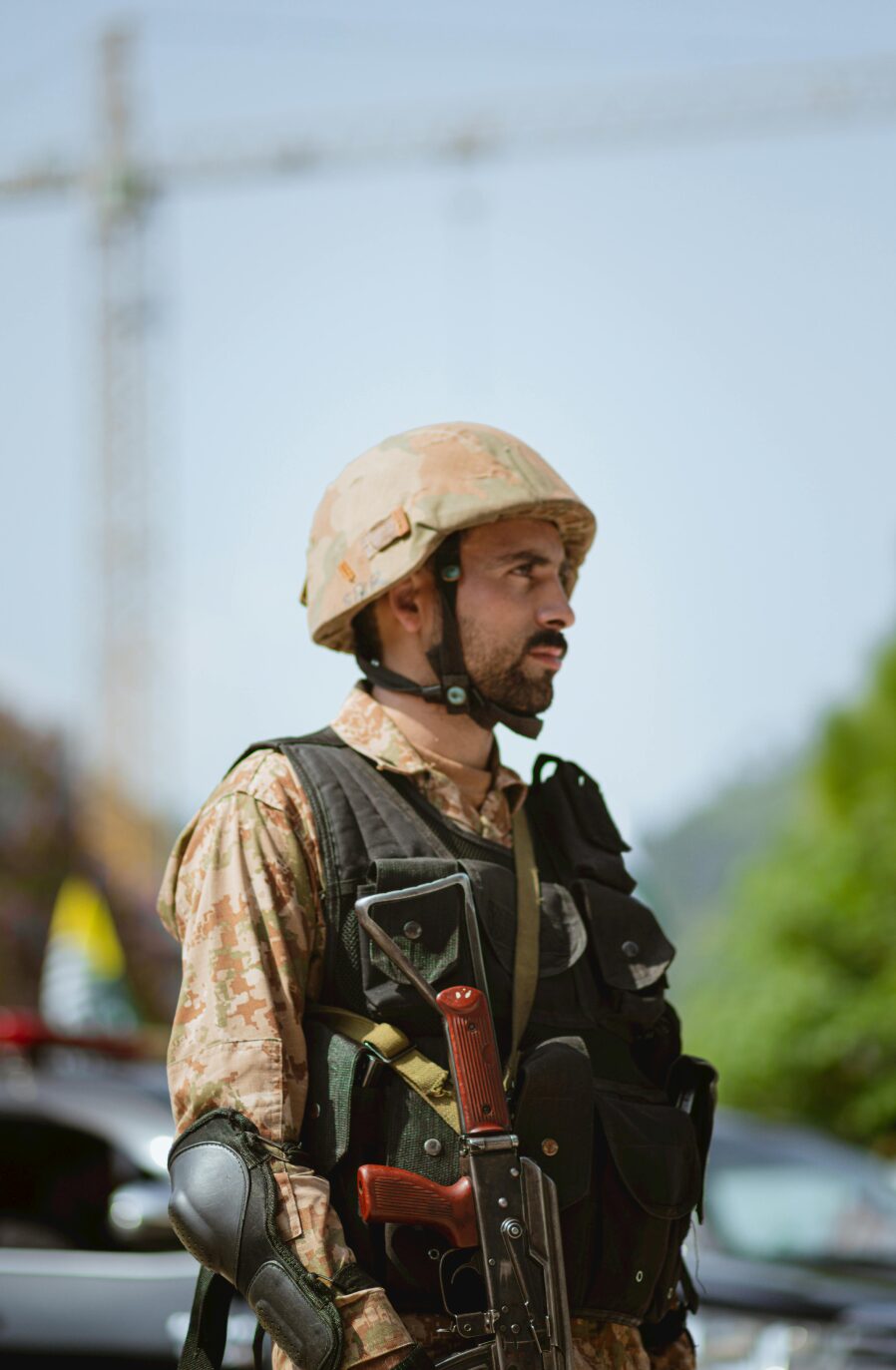
The military dimension of Pakistan’s post-2014 counterterrorism effort produced the most quantifiable results. Operation Zarb-e-Azb, launched in North Waziristan in June 2014, reclaimed Pakistani state authority over areas that had practically been lost to militants. By the end of 2014, at least 2,100 militants had been killed in North Waziristan alone. The operation also pushed significant militant infrastructure across the border into Afghanistan’s Kunar, Nuristan, and Khost provinces, degrading the group’s sanctuary on the Pakistani side of the border. Subsequent phases extended the campaign: Khyber Agency operations (Khyber I-IV) cleared the Tirah Valley and other militant strongholds; a Rangers-led operation in Karachi targeted militant and criminal networks in Pakistan’s largest city; and in 2017, Operation Radd-ul-Fasaad launched nationwide combing operations against residual terrorist elements and their support structures, covering rural and urban areas alike.
Between 2009 and 2018, 21,839 militants were killed in military and security operations. State authority was restored in areas previously governed by militant networks. Foreign militants were denied established sanctuaries, and the TTP’s organizational infrastructure was significantly disrupted. These results reflected military pressure alongside the improved coordination of Counter Terrorism Departments across provinces, intelligence-based targeting, and the political consensus generated by NAP, which had mobilized public support and made sustained resource allocation politically feasible.
2.0 Human and Social Costs
The military campaigns came with costs that extended well beyond casualty figures. The displacement of communities in the tribal belt and the disruption of social structures in areas where military operations concentrated produced lasting consequences. During Zarb-e-Azb and related operations, around 600 schools were partially damaged or destroyed in the tribal districts. By 2020, only 79 new schools had been established in the region. Development budgets allocated to tribal areas were not spent on development, a grievance consistently raised by residents who had expected the merger of the former FATA tribal districts with Khyber Pakhtunkhwa to deliver material improvement in governance and services.
The merger process ran behind schedule. The transition period was supposed to take five years, but the extension of judicial jurisdiction, the reallocation of administrative resources, and the delivery of promised infrastructure and social services lagged substantially. Local communities found that governance conditions had not changed significantly, and the damage from military operations had not been commensurately repaired. These failures created conditions that militant groups and protest movements subsequently sought to exploit. Pakistan’s total economic losses from terrorism in the two preceding decades exceeded $130 billion, with more than 70,000 lives lost. The counterterrorism effort that reduced violence also reshaped tribal society in ways whose consequences are still unfolding.
3.0
THE NON KINETIC FAILURE
Counter-Extremism
Deradicalization
Criminal Justice Reform
Madrassa Regulation
Extremism
4.0 The Return of Militancy
The security gains of 2014 to 2018 were real but insufficiently consolidated. When the Taliban returned to power in Kabul in August 2021, the external environment that had enabled earlier progress was transformed.
The TTP had already begun regrouping in 2020. Splinter groups that had separated from the main organization re-pledged allegiance to new emir Noor Wali Mehsud. The Taliban’s takeover of Afghanistan provided the TTP with the strategic depth it had lacked since Zarb-e-Azb: shelter in Afghan territory, operational support, training facilities, weapons, financial assistance, and movement permits. A UN Security Council report from July 2024 specifically documented Taliban financial support to TTP leader Noor Wali Mehsud and the provision of guesthouses and movement permits to TTP leadership in Kabul. The Afghan Taliban also reportedly facilitated TTP fundraising. Taliban-mediated talks between Pakistan and the TTP collapsed; the TTP ended a months-long ceasefire in November 2022 and resumed attacks. By 2024, the TTP had become the largest terrorist group operating from Afghan territory, with an estimated 6,000 to 6,500 fighters.
Within Pakistan, the consequences were sharp. Security forces conducted 158 anti-militant operations during the year, 75 percent of them in Khyber Pakhtunkhwa. The Islamic State-Khorasan conducted attacks in parts of KP and Balochistan. The Balochistan Liberation Army mounted high-profile operations against security forces, non-Baloch workers, and Chinese nationals, establishing itself as a threat of comparable scale to the TTP. In January 2024, the Ministry of Interior informed parliament that the TTP’s reorganization and operational expansion during 2022 peace talks, negotiations that Pakistan subsequently abandoned, had directly contributed to the surge in militant activity.
5.0 Structural and Political Dimensions
The persistence of the kinetic-non-kinetic imbalance was not purely an operational failure. It reflected structural realities in how Pakistan’s security policy was made and managed. NAP’s formulation was rapid and top-down, driven by the emergency of the APS aftermath. Practitioners closest to the problems of extremism and governance, including district officials and police, were not systematically consulted, generating a disconnect between policy design and implementation realities. Successive changes of government disrupted institutional memory and policy continuity; NACTA’s Board of Governors went years without convening; and provincial execution of non-kinetic measures was uneven in both resources and political priority.
The relationship between civilian and military institutions shaped outcomes in ways that were not always conducive to the comprehensive approach that successive policy documents called for. Apex Committees were designed to integrate civil and military coordination at the provincial level, but in practice corps commanders and the chief of army staff were the dominant figures in those forums, reinforcing military leadership in domains where civilian institutional capacity, covering police, prosecution, local government, and social services, needed strengthening. The civilian institutions that should have complemented military gains did not receive the sustained investment those gains required. Pakistan’s NSP 2022 acknowledged this directly, identifying chronic policy discontinuity as a security vulnerability. The acknowledgment was significant; addressing it in practice is the central challenge the current period presents.