
Sanctions have never occupied a more prominent position in global affairs than they do today. With the 2026 US-Iran war having produced a fragile ceasefire and no comprehensive agreement, the lifting of sanctions has emerged as the central demand in any prospective settlement. For over four decades, sanctions have defined the United States’ relationship with Iran more consequentially than any other instrument short of war. They have shaped Iran’s economy, distorted its society, and failed to fundamentally alter its strategic direction. That the question of sanctions relief now sits at the heart of ceasefire negotiations is entirely consistent with that history.
Defining the Tool: Categories and Legal Architecture
International sanctions are non-armed coercive measures adopted by a state or organisation to pressure another state, group, or entity into changing its behaviour. They are not purely punitive instruments. Sanctions can also signal support for international norms, constrain access to resources, or announce a sanctioning state’s position on a given issue.
The practice has evolved considerably in design. The broadest form is the comprehensive sanction: a blanket embargo on an entire country including all citizens, sectors, and economic relationships. More targeted are sectoral sanctions, which focus on specific industries, and individual sanctions, which freeze the assets and restrict the financial participation of named persons. A more recent and increasingly common instrument is the horizontal or thematic sanction, which applies not by country but by conduct. Any state or entity engaged in activities contrary to stated themes, such as nuclear proliferation or human rights violations, becomes a potential target regardless of geography. The European Union has adopted this approach extensively because it offers flexibility without requiring a country-specific framework for each new target.
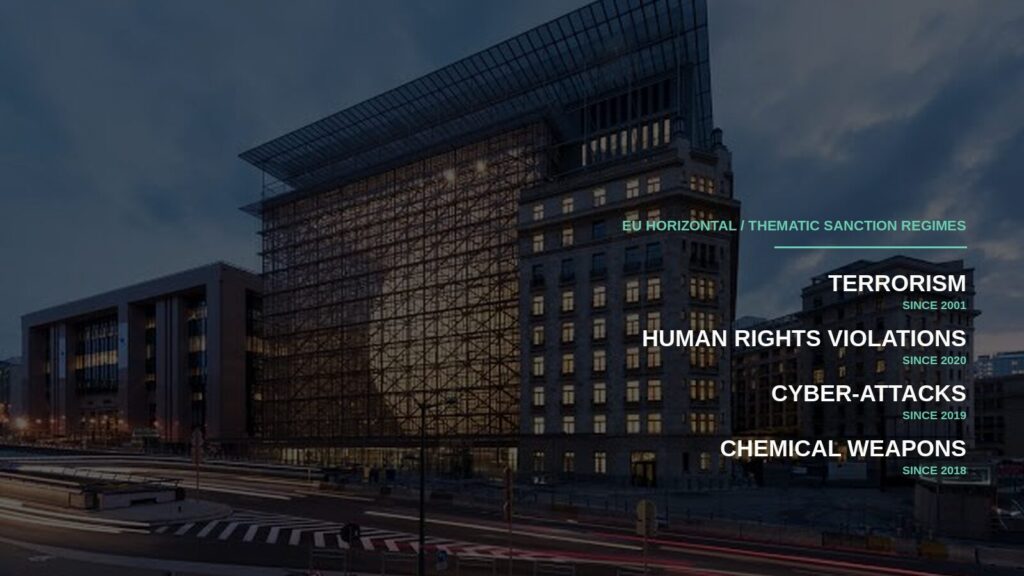
Multilateral sanctions, authorised by the UN Security Council under Chapter Seven of the UN Charter, carry international legitimacy and are binding on all member states. Articles 39 and 41 of the Charter empower the Security Council to respond to threats to international peace through non-military measures including the interruption of economic relations and the severance of diplomatic ties. Unilateral sanctions, imposed outside the UN framework by individual states or regional bodies, rest on different and more contested legal ground. The Articles on Responsibility of States for Internationally Wrongful Acts (ARSIWA 2001) permit countermeasures against states that have committed internationally wrongful acts, but explicitly prohibit measures that affect obligations related to fundamental human rights and humanitarian norms. This limitation has generated sustained legal controversy when unilateral sanctions demonstrably harm civilian populations.
Source: UN Security Council. Data as of 2025. UN sanctions are targeted measures (arms embargoes, travel bans, asset freezes) not comprehensive country-wide embargoes. Non-state regimes also active: Taliban, Al-Qaida/ISIL (not mapped). Iran’s UN sanctions were reimposed via snapback in September 2025.
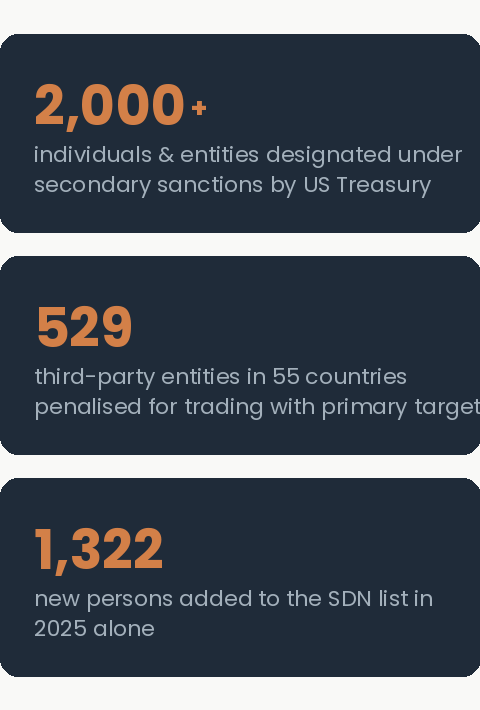
The most contentious instrument is the secondary sanction: a measure that penalises third parties in unsanctioned countries for doing business with a primary target. Only the United States has deployed secondary sanctions at meaningful scale. The UN General Assembly has passed resolutions calling on states not to recognise unilateral extraterritorial coercive economic measures, and the Asian-African Legal Consultative Organisation has characterised such measures as a violation of international law. Some governments have responded with blocking laws, which penalise domestic firms for complying with foreign sanctions regimes. The European Union adopted such a statute in 2018 specifically to prevent compliance with United States sanctions on Iran
American Sanctions on Iran: A Four-Decade Architecture
1979
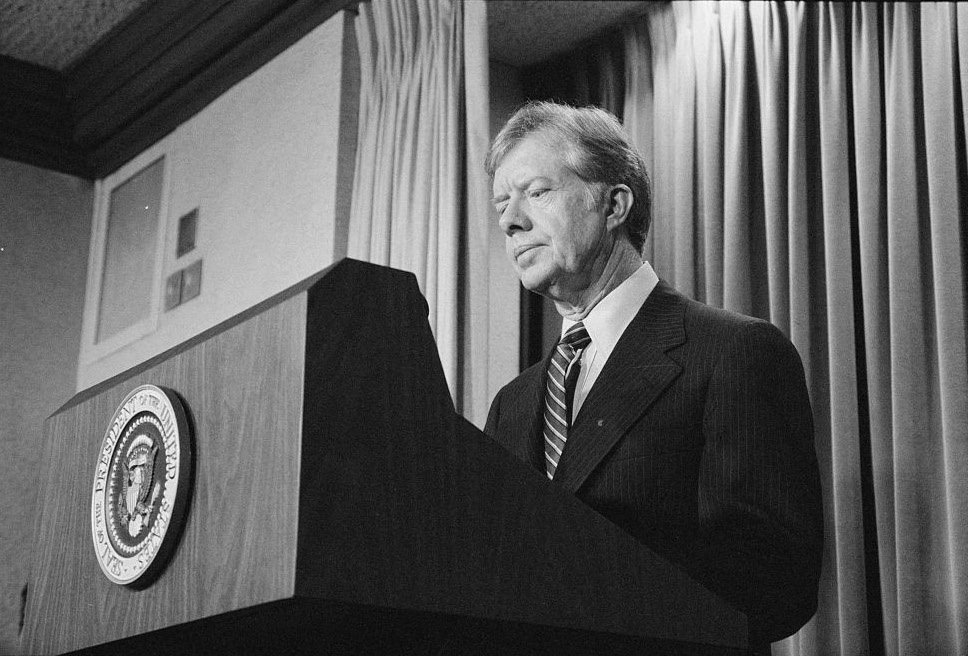
The Carter administration imposed the first sanctions on Iran following the seizure of American diplomatic personnel as hostages. Through the 1980s and 1990s, successive administrations expanded the framework to address Iran’s support for armed groups and its pursuit of weapons technology. In 1996, Congress enacted landmark legislation mandating the first Iran-related secondary sanctions, targeting foreign firms involved in developing Iran’s oil resources.
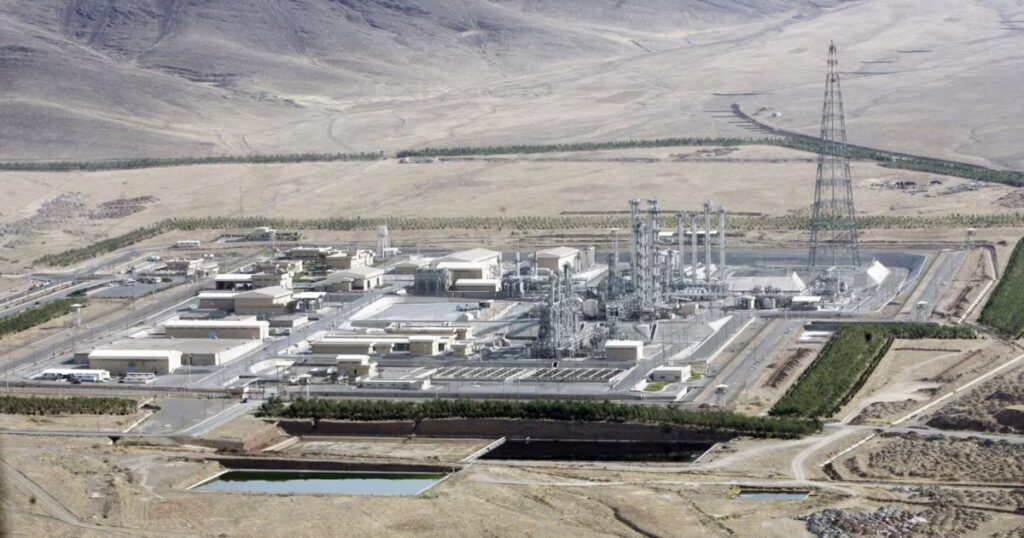
Pressure intensified after 2002, when previously undisclosed Iranian nuclear facilities came to light. The UN Security Council imposed four rounds of multilateral sanctions between 2006 and 2010.
2011
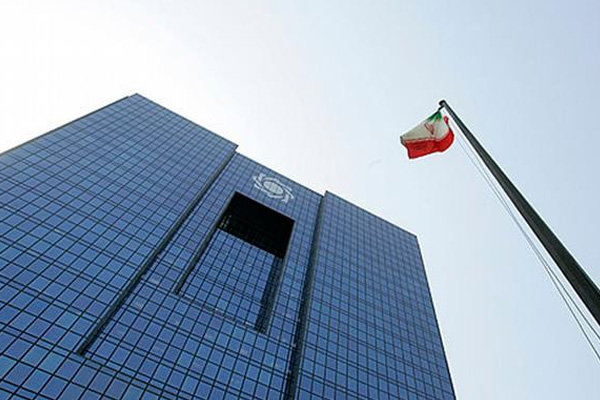
US and EU went further, sanctioning Iran’s Central Bank, banning Iranian oil exports, and cutting Iran off from the international financial system. Iran’s crude oil exports fell by more than 50%, from approximately 2.5 million barrels per day to just over 1 million. Around $120 billion in Iranian assets held abroad were frozen, and Iran’s economy contracted sharply in the two years ending March 2014.
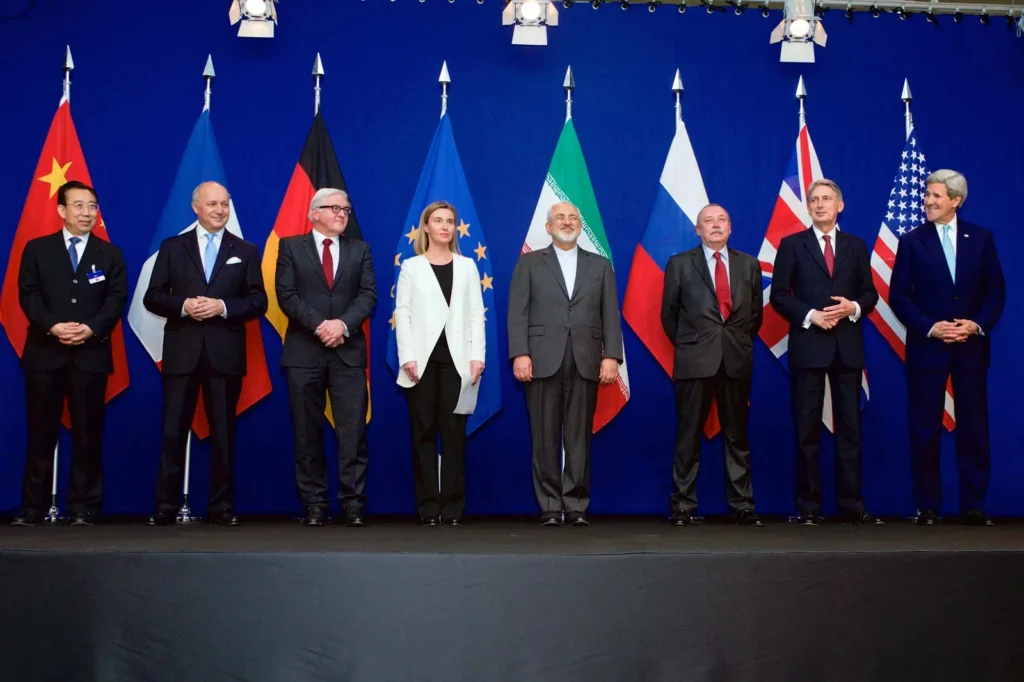
In 2015, the Joint Comprehensive Plan of Action was concluded, under which Iran accepted limits on its nuclear programme and additional international inspections in exchange for substantial sanctions relief.
2018
The first Trump administration withdrew from the agreement and reimposed all sanctions, citing Iran’s continued regional activities and the limited duration of certain JCPOA restrictions. The stated goal was to compel Iran to negotiate a broader deal. Iran did not do so. Late Supreme Leader Ali Khamenei promoted what he described as a resistance economy, reducing Iran’s dependence on external actors. China continued purchasing Iranian oil throughout this period. Sanctions, for all their economic force, did not alter Iran’s core strategic direction.
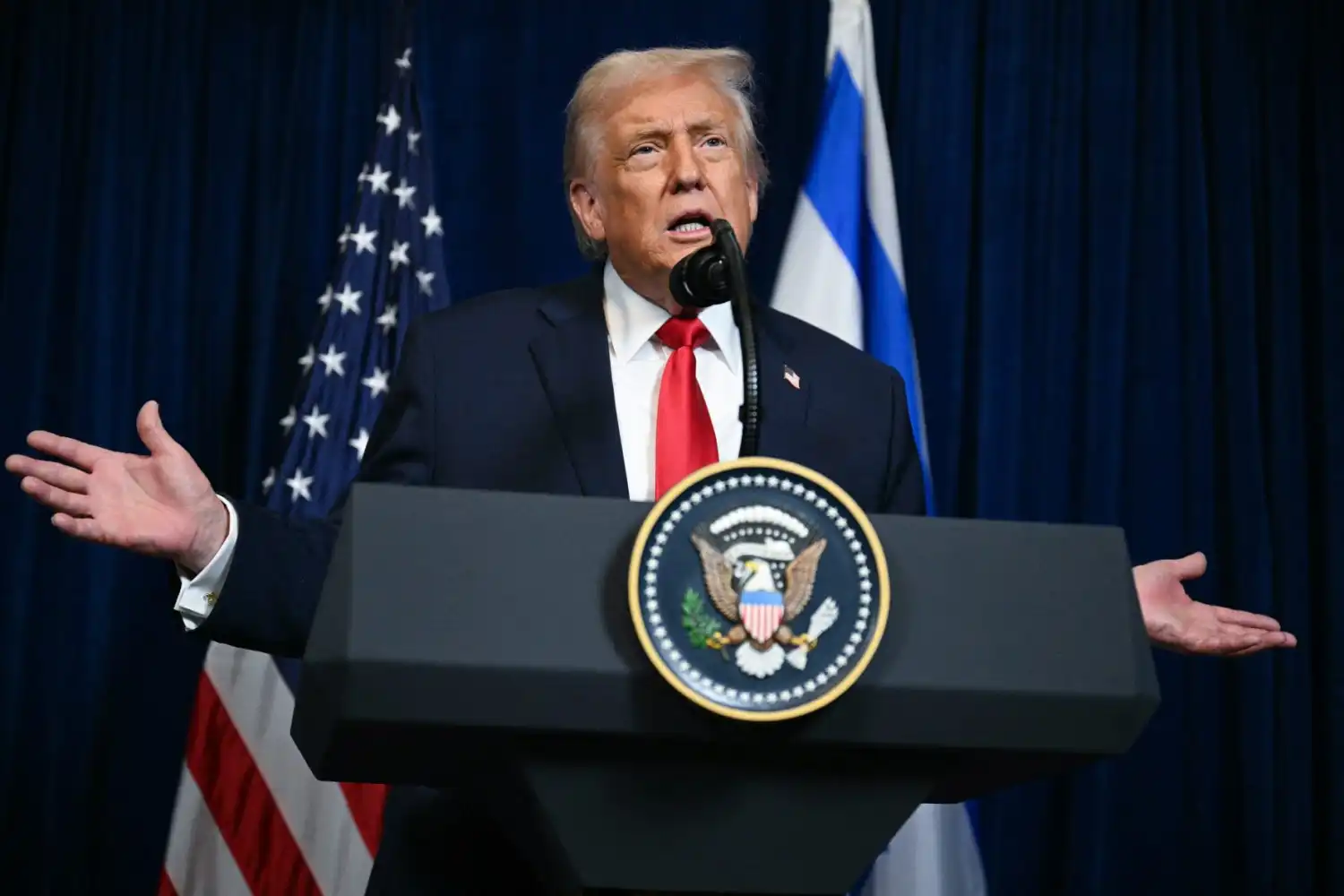
The second Trump administration directed renewed maximum pressure from February 2025. Indirect nuclear talks began in April 2025 but appear to have collapsed following the June 2025 conflict. President Trump subsequently wrote publicly that he had been working on the possible removal of sanctions but dropped that work following Iranian rhetorical defiance.
Why Sanctions Fail: The Evidence
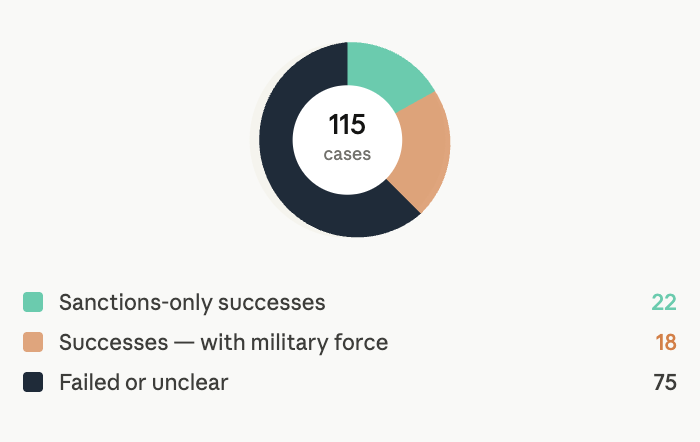
The academic record on sanctions effectiveness is considerably more sceptical than the rhetoric of sanctioning governments tends to allow. A foundational study by Hufbauer, Schott, and Elliott examined sanctions cases between 1915 and 1990 and concluded that sanctions succeeded in forty of 115 cases. Robert Pape subsequently re-examined all 115 cases, adjusting the parameters for what constituted a genuine success, and found that sanctions achieved their goals in only five instances. More pointedly, eighteen of the cases initially counted as successes involved military force deployed alongside sanctions, raising the fundamental question of which instrument was actually doing the coercive work.
Several structural factors explain the frequency of failure. Authoritarian regimes tend to securitise sanctions, using external economic pressure to fuel nationalism and generate a rally-around-the-flag effect that consolidates the government’s domestic position. The presence of alternative economic partners substantially reduces the impact of any unilateral regime. China’s continued purchase of Iranian oil throughout successive rounds of American maximum pressure is the defining contemporary example. Environmental shifts and competing foreign policy priorities also force sanctioning states to abandon or dilute their own pressure campaigns, undermining the credibility and coherence of the instruments they deploy. The JCPOA itself illustrates this dynamic: a sanctions-backed agreement reached in 2015 was unilaterally dismantled by a subsequent American administration in 2018, demonstrating that the durability of sanctions-based arrangements depends as much on domestic political continuity in the sanctioning state as on compliance by the target.
The Human Cost: Evidence and Intent
The gap between sanctions’ targets and their victims is where the deepest damage is done and where the most serious legal and ethical questions arise. In the 1970s, approximately fifteen countries were under Western unilateral sanctions in any given year. By the 1990s and 2000s, that figure had risen to thirty. As of the 2020s, it exceeds sixty, a striking proportion of which are countries in the Global South.
A 2025 study published in The Lancet Global Health, led by economist Francisco Rodriguez at the University of Denver, provides the first comprehensive global estimate of the mortality associated with international sanctions. Analysing age-specific mortality rates for 152 countries between 1971 and 2021, the study establishes a significant causal relationship between unilateral sanctions and increased mortality. The strongest effects were found for unilateral, economic, and United States-imposed sanctions; no statistically significant effect was found for UN-mandated sanctions. Unilateral sanctions were associated with approximately 564,000 deaths per year during the 2010 to 2021 period, a figure exceeding average annual battle-related casualties from armed conflict. More than half of the victims are children and the elderly. Deaths among children under five years old represented fifty-one per cent of total sanctions-related mortality over the period studied.
Sanctions imposed unilaterally by the US and EU are associated with a total of 38 million deaths since 1970.
Chart: Global Inequality Project (globalinequality.org) Source: Rodriguez et al, The Lancet Global Health (2025)
Case-level evidence reinforces these aggregate findings. Sanctions on Iraq during the 1990s produced widespread malnutrition, the collapse of clean water infrastructure, and severe shortages of medicine and electricity. Sanctions on Venezuela contributed to an estimated forty thousand excess deaths in a single year between 2017 and 2018. The 2018 reimposition of sanctions on Iran disrupted healthcare supply chains and banking access, severely limiting the country’s capacity to respond to subsequent public health crises.
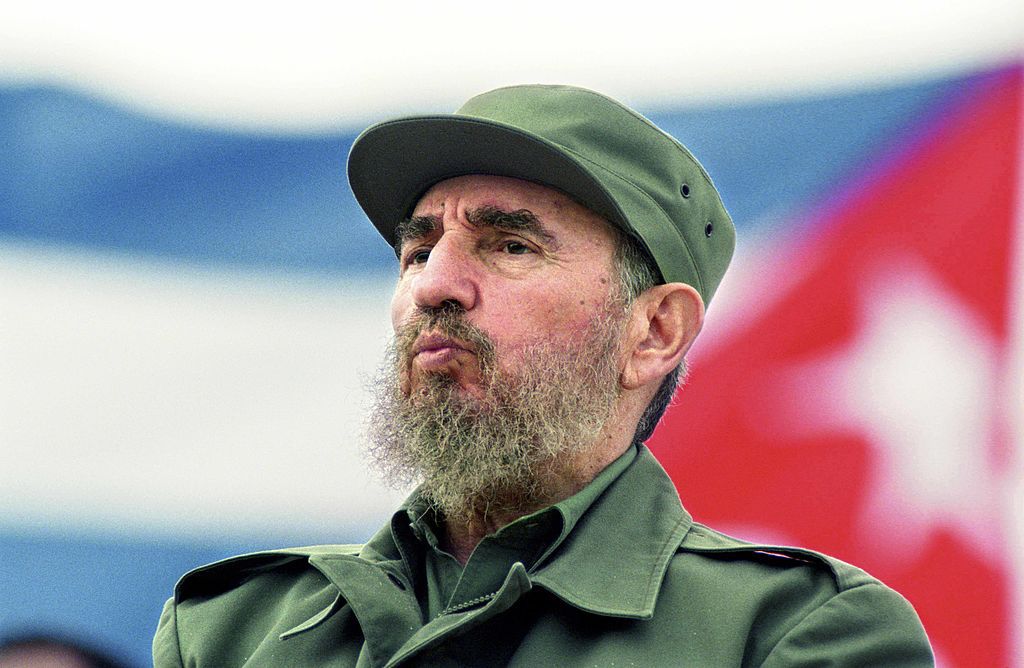
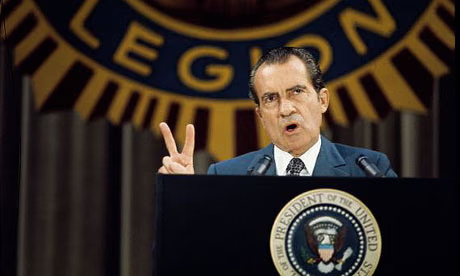
What makes the human cost harder to dismiss as unintended is the documentary evidence of intent. A State Department memorandum from April 1960 stated that because Fidel Castro enjoyed widespread popular support, every possible means should be used to weaken Cuba’s economic life, denying money and supplies to bring about, in its own formulation, hunger, desperation, and the overthrow of the government. When Salvador Allende was elected in Chile in 1970, the Nixon administration’s objective was to make the economy scream. The historian Peter Kornbluh describes the resulting sanctions as an invisible blockade that cut Chile from international finance, created social unrest, and paved the way for a United States-backed coup.
Sanctions are consistently framed as an alternative to armed conflict, a means of applying pressure without violence. The evidence qualifies that framing considerably. The violence sanctions produce is real. It is simply slower, harder to attribute, and easier to obscure behind the claim that it is the sanctioned government, rather than the sanctioning one, that bears responsibility for its population’s suffering.
Implications
The evidence on sanctions presents a consistent picture that sits uncomfortably alongside their continued and expanding use.
They impose severe costs on civilian populations, including those in third countries with no direct role in the conduct being sanctioned
564K
estimated deaths per year linked to unilateral sanctions, 2010–2021 — exceeding average annual battle casualties from armed conflict
They rarely succeed in altering the core strategic behaviour of targeted governments, particularly authoritarian ones with access to alternative partners
4%
genuine success rate on revised parameters — Pape (1997) reanalysis of 115 cases from 1915 to 1990
When they do appear to work, the change can be reversed when political will erodes
3 yrs
the JCPOA — cited as evidence sanctions work — was dismantled within three years by a change of administration in Washington
The Iran case illustrates the instrument’s paradox most clearly. Decades of maximum pressure devastated the Iranian economy and imposed enormous costs on Iranian society without compelling a fundamental shift in Iranian strategic behaviour. The 2015 JCPOA, often cited as evidence that sanctions work, was itself undone within three years by a change of administration in Washington. The question it leaves open is not whether sanctions create economic pressure, which they demonstrably do, but whether economic pressure reliably translates into the political outcomes it is designed to produce.
As the use of sanctions continues to expand globally, the findings emerging from systematic research present a challenge to policymakers. An instrument associated with mortality tolls comparable to armed conflict, applied to an ever-growing share of the world’s countries, and with a limited record of achieving its stated goals, demands more rigorous scrutiny than it has historically received. The redesign of sanctions to reduce humanitarian harm, and greater seriousness about the conditions under which they are imposed and lifted, is not merely an academic recommendation. It is a requirement of both legal obligation and basic accountability.