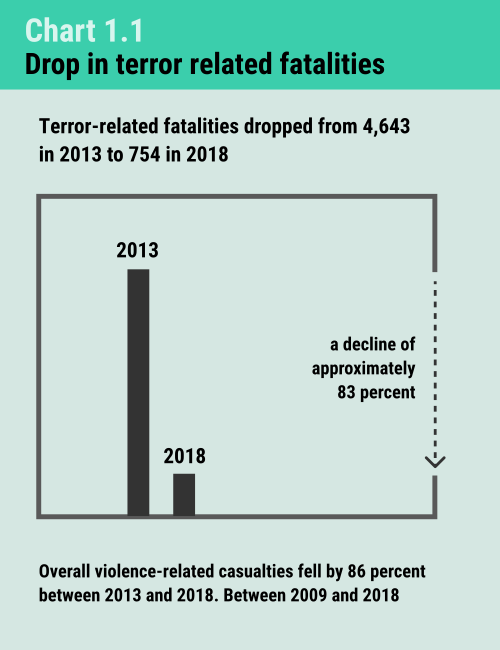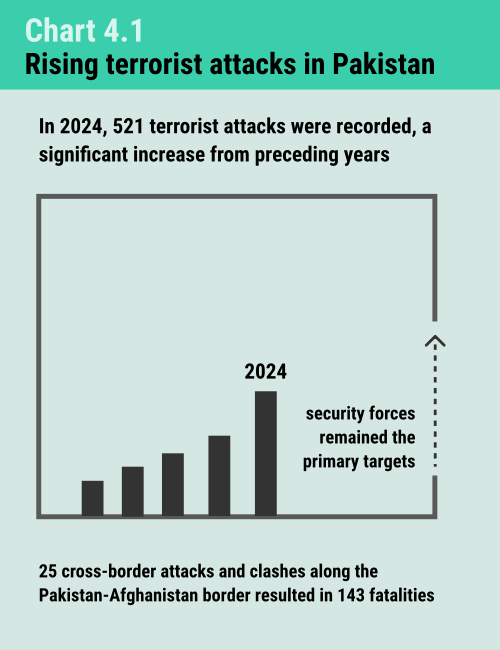
Pakistan’s National Action Plan produced rapid and measurable results in reducing terrorist violence after 2014. Between 2013 and 2018, terrorism-related fatalities fell by approximately 83 percent. The state regained authority over contested territory and dismantled significant militant infrastructure, demonstrating that coordinated national effort could reverse a decade-long deterioration in internal security. These were real and substantial achievements. Yet the same period exposed a persistent imbalance: Pakistan’s capacity to reduce violence through military force outpaced its capacity to address the structural and ideological conditions sustaining militancy. That imbalance left earlier security gains vulnerable. By 2024, the number of terrorist attacks had reached levels comparable to those of 2015, driven primarily by the resurgence of the Tehreek-e-Taliban Pakistan following the Taliban’s return to power in Afghanistan. This factsheet examines what the strategy delivered operationally, where it fell short institutionally, and why the gains it produced did not hold.
1.0 The Kinetic Record: Sustained Military Pressure and Its Results
The military dimension of Pakistan’s post-2014 counterterrorism effort produced the most quantifiable results. Operation Zarb-e-Azb, launched in North Waziristan in June 2014, reclaimed Pakistani state authority over areas that had practically been lost to militants. By the end of 2014, at least 2,100 militants had been killed in North Waziristan alone. The operation also pushed significant militant infrastructure across the border into Afghanistan’s Kunar, Nuristan, and Khost provinces, degrading the group’s sanctuary on the Pakistani side of the border. Subsequent phases extended the campaign: Khyber Agency operations (Khyber I-IV) cleared the Tirah Valley and other militant strongholds; a Rangers-led operation in Karachi targeted militant and criminal networks in Pakistan’s largest city; and in 2017, Operation Radd-ul-Fasaad launched nationwide combing operations against residual terrorist elements and their support structures, covering rural and urban areas alike.
Between 2009 and 2018, 21,839 militants were killed in military and security operations. State authority was restored in areas previously governed by militant networks. Foreign militants were denied established sanctuaries, and the TTP’s organizational infrastructure was significantly disrupted. These results reflected military pressure alongside the improved coordination of Counter Terrorism Departments across provinces, intelligence-based targeting, and the political consensus generated by NAP, which had mobilized public support and made sustained resource allocation politically feasible.