Classifications of Violence

Terrorism, Insurgency, and Armed Conflict in International and Domestic Law

How a government labels political violence is not merely a rhetorical choice. The label applied to a group or a conflict activates a specific body of law, determines what force may lawfully be used, defines who is protected and who may be targeted, and governs whether humanitarian organisations can operate. The terms terrorism, insurgency, militancy, and armed conflict carry distinct meanings in international law, yet they are routinely conflated in political discourse and government practice. This factsheet examines how each category is defined under international and domestic law, what legal consequences follow from each classification, and why the choice of framework matters in practice, with particular reference to Pakistan’s domestic legal landscape.

Why Classification Matters?

The classification of violence is foundational in international humanitarian law (IHL) because it determines which specific legal rules apply to a given situation. Identifying whether a situation constitutes an international armed conflict (IAC), a non-international armed conflict (NIAC), or merely a case of internal disturbance triggers a different set of rights and obligations for all parties involved. Classification therefore determines whether lethal force may lawfully be used, how detainees are treated, how criminal liability is assigned, and whether humanitarian organisations may access affected populations. Each of these consequences is concrete and consequential for the people living inside a conflict.

International Armed Conflict (IAC)

Full body of the Geneva Conventions applies

Captured fighters are entitled to prisoner-of-war status

Non-International Armed Conflict (NIAC)

Limited protections of Common Article 3 to the Geneva Conventions and, where applicable, Additional Protocol II govern

Below the threshold of armed conflict, international human rights law rather than IHL applies

State responses are expected to conform to law enforcement norms

The Definition of Terrorism in International Law

There is no single, universally agreed definition of terrorism in international law. The concept is generally understood as the intentional use of violence against civilians or non-combatants to create fear, intimidate a population, or coerce a government or organisation. Three elements recur across legal instruments: a serious criminal act, a political or ideological motive, and frequently a transnational dimension.

UN Security Council Resolution 1566

adopted in October 2004, provides one of the most widely referenced formulations

criminal acts intended to cause death, serious injury, or hostage-taking with the purpose of inciting terror or compelling governments or organisations to act.

Under IHL, terrorism in the context of armed conflict refers specifically to acts of violence directed against civilians or civilian objects, which are strictly prohibited regardless of any political or military justification advanced by the perpetrators.

The absence of a binding universal definition creates practical difficulties. Domestic terrorism is regulated by national law, while international terrorism involves actions transcending national boundaries. The same act may therefore be classified differently depending on the jurisdiction and the applicable legal regime, with significant consequences for the legal protections and liabilities that follow.

The Special Tribunal for Lebanon confirmed three core elements: a criminal act, an intent to spread fear or coerce, and a transnational element.

Armed Conflict: Thresholds and Legal Categories

Armed conflict as a legal concept carries its own definitional requirements. Under Common Article 3 of the Geneva Conventions, a non-international armed conflict arises when one or more non-state armed groups are party to hostilities, either against governmental armed forces or against each other.

01

the hostilities must reach a minimum level of intensity, demonstrated by their collective character, by the state’s need to deploy military rather than police forces, or by the sustained nature of the fighting.

02

the non-governmental groups must be considered parties to the conflict, meaning they possess organised armed forces operating under a command structure with the capacity to sustain military operations.

Additional Protocol II builds on Common Article 3 by requiring that non-governmental parties exercise territorial control sufficient to carry out sustained and concerted military operations. Protocol II applies only to conflicts between state armed forces and dissident armed forces or other organised groups, and does not extend to conflicts exclusively between non-state actors.

armed conflict exists whenever there is resort to armed force between states, or protracted armed violence between governmental authorities and organised armed groups, or between such groups within a state.

Tadic decision of 1995

This formulation remains influential in determining the legal threshold for both IACs and NIACs. Below this threshold lie internal disturbances: situations involving serious or lasting internal confrontation including acts of violence, from spontaneous revolts to organised struggles against authorities, where the state restores order using police or armed forces but where no armed conflict in the legal sense exists.

Terrorism, Insurgency, and Militancy: Conceptual Distinctions

The terms terrorism, insurgency, and militancy are regularly used interchangeably, but they carry distinct meanings in law and academic analysis.

Terrorism is primarily a tactic or method: the use of violence or threats of violence to intimidate an audience beyond the immediate victims in order to achieve political, religious, or ideological goals.

It focuses on psychological impact and is often employed by smaller groups seeking to shape public opinion or compensate for limited military capacity. Terrorist groups can be small, sometimes comprising no more than a handful of individuals, and they typically operate as clandestine cells without holding territory.

Insurgency is a strategy and a broader movement. It is an organised effort aimed at overthrowing a constituted government through subversion and armed conflict, typically seeking to seize control of the state or establish a rival administration.

Insurgent groups are generally larger and more structured than terrorist cells, often holding or contesting territory and depending on a base of popular support within the population. Insurgents primarily target military forces and government installations through guerrilla tactics, though they may employ terrorism as one method among others.

Militancy refers to a highly aggressive, often violent approach to furthering a political or religious cause. While militants use violent methods, the term is broader and does not carry the specific strategic connotations of insurgency or the targeted civilian focus that defines terrorism.

Militancy can be understood as an intermediate posture that may develop toward either insurgency or terrorism over time. A key point is that these categories are not mutually exclusive. Insurgents may use terrorism as a specific tactic, and a group can simultaneously exhibit the organisational character of an insurgency and the methods associated with terrorism. This overlap creates considerable legal complexity and creates opportunities for the political manipulation of labels.

The Legal Status of Non-State Actors

How a non-state actor is classified under IHL directly shapes the legal status of its members. An organised armed group in IHL is a non-state party to a NIAC that possesses a command structure, internal discipline, and the capacity to sustain military operations. Relevant characteristics identified in IHL jurisprudence include a hierarchical organisation capable of directing subordinates, logistical capacity to acquire weapons and train personnel, mechanisms to enforce compliance with rules, and a collective decision-making structure.

Non-state actors generally do not enjoy formal combatant status or prisoner-of-war immunity under traditional IHL, rights reserved for state-affiliated armed forces in international armed conflicts.

In NIACs, the status of combatant does not exist in the same way, and fighters in non-state armed groups lack immunity from prosecution. Members of such groups who engage in combat are often treated as unlawful or unprivileged combatants, subject to prosecution under domestic law for participation in hostilities as well as for specific criminal acts.

Regardless of legal status, however, captured non-state actors retain protections under Common Article 3 of the Geneva Conventions and customary international law, including the requirements of humane treatment and fair trials.

Legal Consequences of Classification

The practical consequences of classifying a situation as armed conflict rather than as terrorism, or vice versa, are substantial. Under the counter-terrorism framework, the state response is primarily a law enforcement matter. Terrorist designation criminalises membership, funding, and support of the designated organisation. Assets may be frozen and movement restricted. The use of force is expected to be limited to arrest and prosecution under human rights standards rather than targeted killing. Designation can also create a chilling effect on humanitarian operations: anti-terrorism legislation may make the provision of material support, services, or medical assistance to a proscribed group a criminal offence, even where such assistance would be protected under IHL.

When a situation rises to the level of armed conflict, IHL governs. IHL requires distinction between civilians and combatants, proportionality in the conduct of attacks, and military necessity as the standard for permissible force. Attacks against military objectives, including organised non-state armed groups, are permitted. Parties may detain individuals for the duration of hostilities for security reasons without criminal charges, a practice not permitted under ordinary human rights law. IHL also mandates humanitarian access, allowing impartial organisations to engage with non-state armed groups on compliance with humanitarian rules, something that counter-terrorism law can obstruct.

A situation can simultaneously constitute an armed conflict subject to IHL and involve acts that are terrorist under domestic or international criminal law. However, the classification of a group as a terrorist organisation can be used by states to deny legal status and protections to fighters who might otherwise be entitled to them under IHL as parties to a recognised armed conflict. This over-classification risk is well documented: states may categorise groups as terrorist organisations specifically to avoid the IHL obligations that acknowledgment of an armed conflict would impose on them.

Pakistan’s Domestic Framework

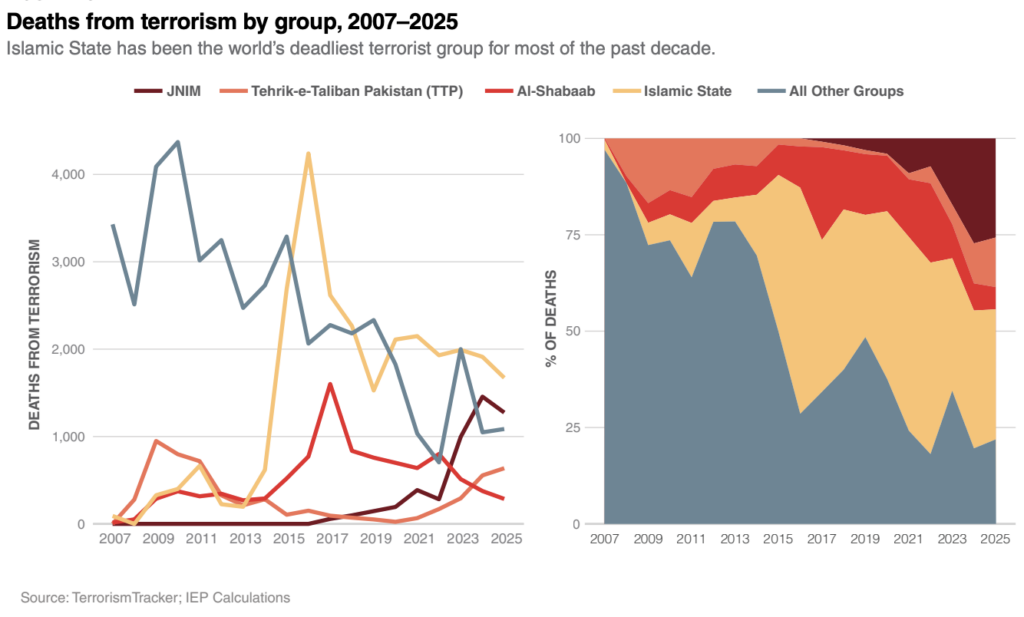
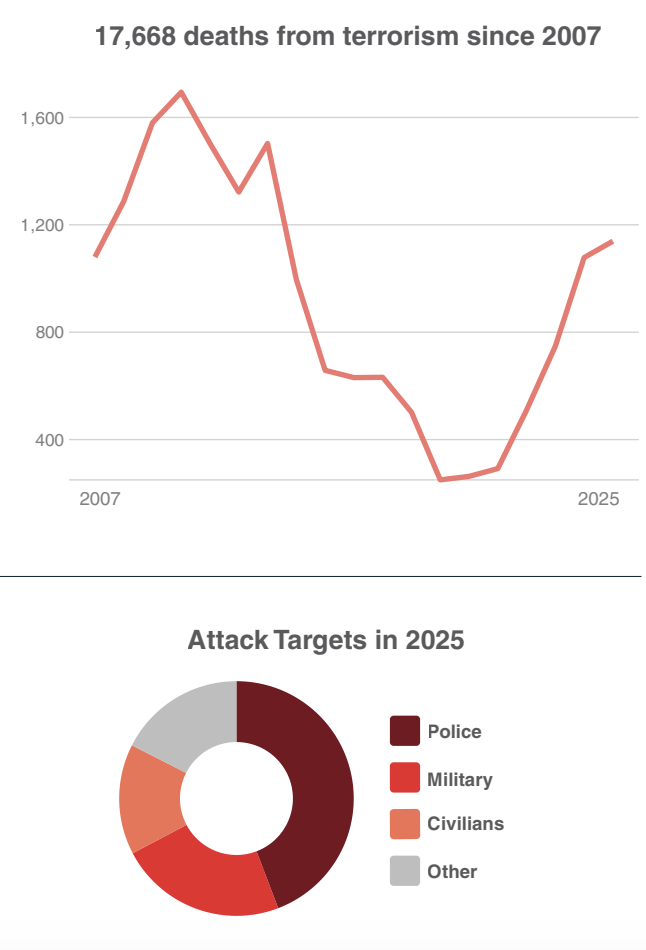
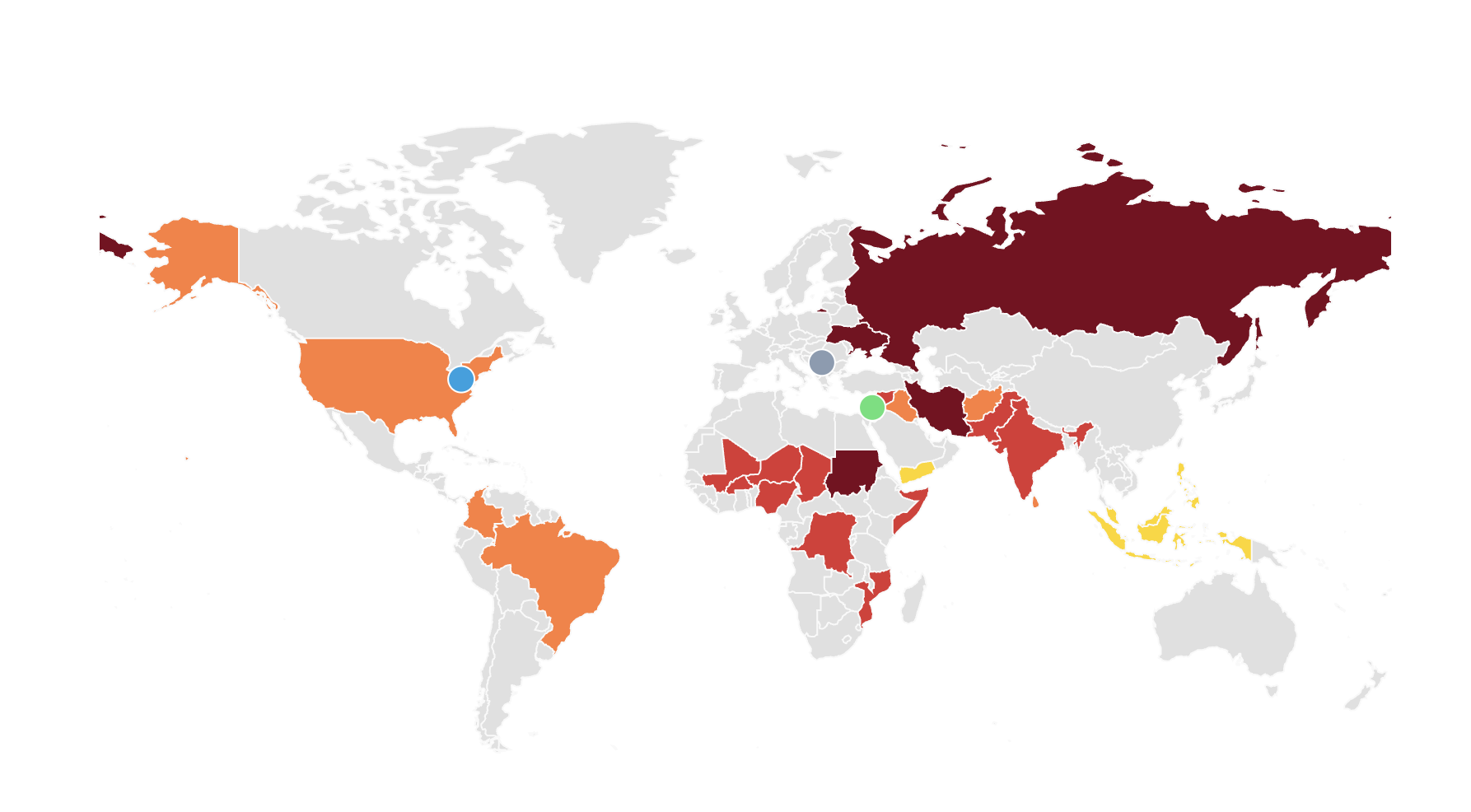
Pakistan became the most impacted country by terrorism in 2026 and ranks no.1 on Global Terrorism Index

Pakistan’s primary legislative instrument in this area is the Anti-Terrorism Act 1997.

Defines terrorism as actions intending to terrorise the public, intimidate the government, or cause death or injury. The definition extends to creating a serious risk to public safety, destruction of property, advancing a religious or sectarian cause, or threatening the government or public to accept demands. The Act establishes special courts to try such cases.

Govern proscribed organisations, defined as groups declared illegal due to involvement in terrorism or extremist activities. The National Counter Terrorism Authority (NACTA) manages these designations, which carry restrictions on activities, assets, and operations of the designated groups.

Pakistan’s approach to classifying violent non-state actors has historically followed a strategic logic that differentiates between groups considered a direct threat to state security and those that do not directly challenge state foreign policy interests. This differentiation has influenced the intensity and consistency of counter-terrorism responses over time. The conflict in Balochistan illustrates the domestic application of these frameworks. The government classifies it as a violent separatist movement, with key militant factions designated as terrorist organisations. The nature and sustained scale of the violence, as well as the organisational capacity of the armed groups involved, raises questions about which legal thresholds apply and what protections are owed to persons affected by the conflict.

Conclusion

The distinction between terrorism, insurgency, militancy, and armed conflict is not an abstract legal exercise. Classification determines which bodies of law apply, who may be targeted and on what legal basis, what protections detainees are entitled to, and whether humanitarian organisations can reach those in need. A state that frames an organised armed conflict as a counter-terrorism operation insulates itself from IHL scrutiny and narrows the legal protections available to both fighters and civilians. Conversely, acknowledging the existence of a NIAC accepts both the authority to use force against organised armed groups and the obligation to comply with the laws of war, including the protection of civilians and the facilitation of humanitarian access.
In contexts like Pakistan, where multiple forms of political violence coexist and legal frameworks frequently overlap, these distinctions carry direct consequences for accountability, protection, and the rule of law. The choice of label is never neutral. It is a legal act with legal effects, and scrutiny of how that choice is made, and by whom, is central to assessing whether states are meeting their obligations under both international and domestic law.

Join our mailing list!